
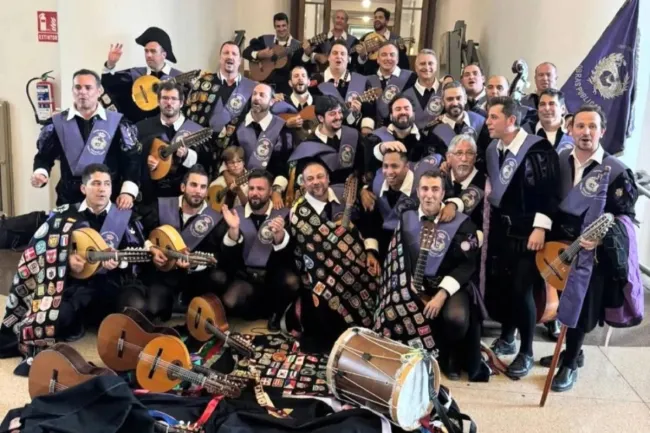
Óscar Carballo Ares, Dean of CITOP Madrid and Tuna Member: “Being a Tuna member is a way of life that stays with you forever”
On June 4th, the Tuna was declared an Intangible Cultural Heritage, a recognition that celebrates centuries of history, music, and university tradition. We spoke with Óscar Carballo Ares, Dean of the College of Technical Engineers of Public Works and Civil Engineers of Madrid (CITOP Madrid) and a proud Tuna member, about the significance of this designation and the enduring relevance of a tradition that continues to thrive, reinventing itself without losing its essence.
Óscar Carballo Ares not only embodies leadership and innovation in the field of civil engineering, but also the joyful and fraternal spirit that characterizes the tunas (traditional Spanish student musical groups). A civil engineer by training, he has dedicated his career to modernizing the public works sector, promoting sustainability, innovation, and teamwork. From his position at the head of CITOP Madrid, he fosters a close and participatory vision of engineering, open to the changing times and connected with society.
But beyond blueprints and projects, Óscar also carries music within him. As a member of La Tuna, he combines technical expertise with tradition, the seriousness of an engineer with the joy and university spirit of a tuna. This duality—between the precision of calculation and the emotion of a serenade—defines a professional and a person who knows how to enjoy both a job well done and good times shared.
What has it meant to you that the Tuna has been declared an Intangible Cultural Heritage Asset?
It's a very special recognition because it dignifies something that is part of our university and cultural history. For years, the image of the tuno has been marked by stereotypes, but this declaration helps to show what we really are: students and professionals committed to music, tradition, and camaraderie. It's an incentive to continue passing on our values to new generations and a way to demonstrate that the Tuna is still alive, evolving, and adapting without losing its essence.
What is it like to be a member of a Tuna (a traditional Spanish student music group) at universities today?
We are experiencing a very positive moment. Many universities are resuming recruitment, and there is great enthusiasm among young people to join the Tuna. New members are supported throughout the entire process, not only musically, but also academically and personally. At first, they wear overalls and a hard hat because they are "under construction." When they complete their training and don the "grillo," the traditional costume, a transformation occurs: at that moment, they become Tuna members for life.
In the past, many Tuna members paid for their studies with the tips they received. Is that tradition still alive today?
In the past, it was quite common. Tuna members would go out to sing in the streets or in serenades, and with what they earned, they could cover part or even all of their studies. It was a very respectable way to earn a living while cultivating their musical talents and friendships. Today, that's no longer the norm, although there are still cases of students who, thanks to the Tuna, have been able to finance part of their studies. Furthermore, universities offer grants or funding for the upkeep of the Tuna groups, so new members don't have to worry about the cost of costumes or instruments.
What values and rules govern the Tuna?
The Tuna is based on respect, discipline, loyalty, and above all, brotherhood. The codes of conduct are part of its essence and are learned over time and through shared experiences. One of the most curious aspects is that we call each other by nicknames, not our given names. This creates a unique identity within the group. I have members I've known for years, with whom I've shared trips, music, and stories, and I still don't know their real names. That camaraderie and sense of belonging are what make the Tuna so special.
How do you manage to balance your professional and family life with the Tuna?
The Tuna is a part of my life that doesn't compete with my work, but rather complements it. It brings me joy, creativity, and balance. At home, they understand this very well; my wife is the sister of a Tuna member, so she's familiar with our philosophy and way of life. It's true that there are occasional complaints (laughs), especially when the serenades go on too long, but generally, she takes it in stride. The Tuna has taught me to enjoy the present and to maintain a youthful spirit, something that also has a positive influence on my professional work.
What role does the Tuna play today, and how do you see its future?
The Tuna continues to be a symbol of university culture and an ambassador of Spanish joy and tradition worldwide. We have traveled extensively: to the Vatican, to New York, and to various Latin American countries where the Tuna tradition is very strong, such as Mexico, Colombia, and Peru. There are also active Tuna groups in Europe, especially in Portugal —where they dress differently— and in the Netherlands, and even in the United States.
In Madrid, we have the support of the City Council, which promotes our performances in public spaces and cultural events.
The future of the Tuna lies in keeping the tradition alive, but also in continuing to evolve: today there are mixed and all-female Tuna groups, which demonstrates that the Tuna knows how to renew itself without losing its soul, adapting to the times without abandoning its essence.
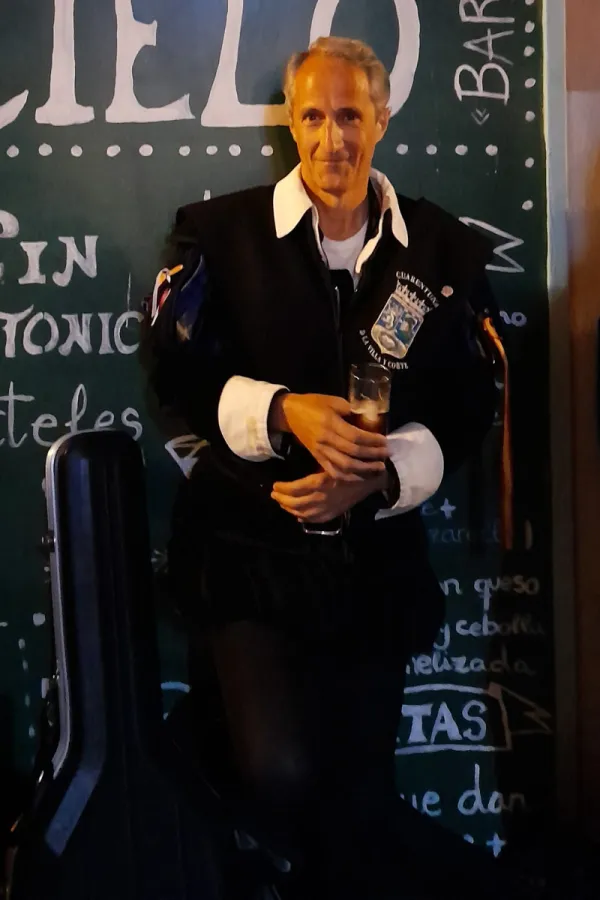
“I feel young again every time I go out serenading.” I’m sticking with this quote from Óscar because it perfectly reflects what it means to be a tuno: a philosophy of life that balances professional and personal life, music with tradition, and discipline with fun. The camaraderie and support among the members of the Tuna create strong bonds, teach values like solidarity and perseverance, and strengthen the humanity of those who participate.
Going out serenading with the tunos isn’t just about singing; it’s about sharing stories, laughter, anecdotes, and moments that stay with you. The Tuna demonstrates that university tradition is still alive and that music has the power to unite generations. Even in adulthood, being a tuno allows you to maintain the freshness, enthusiasm, and joy of your youth.
So, if you’re ever invited to a serenade, don’t hesitate: leave your watches and worries behind, join the tunos, and let yourself be carried away by the music and the company. I assure you that you’ll end up with a smile on your face and another story to tell. I, for one, am already ready for the next one.