
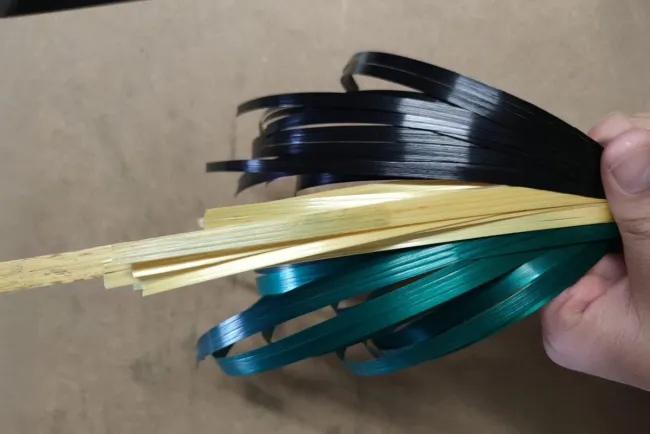
Rye straw marquetry, a craft technique that arrived in Europe in the 17th century from the East, has been a symbol of delicacy and refinement for centuries. Initially used to decorate small pieces, such as the tobacco boxes in circulation at the time, it reached its peak in Art Deco France. Masters such as Jean-Michel Frank, Jean Rogère, and André Groult elevated this discipline to the status of art, creating objects and furniture that remain benchmarks in the history of design today.
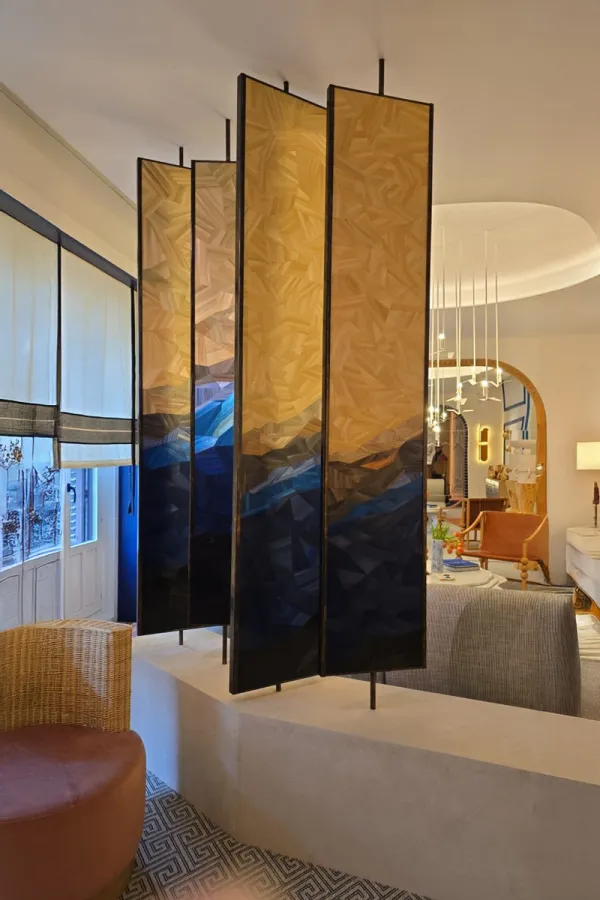
This technique is currently experiencing a renaissance in haute decoration. Its ability to transform light into dynamic and vibrant flashes, thanks to the natural silica present in straw, makes it a unique material for murals, furniture, and decorative pieces. In Spain, however, its practice is rare. Among the few who cultivate it with passion and mastery is Rubén Fabuel, an artist who in 2017, during a chance visit to an antiques fair, discovered this tradition and found his own creative path. Since then, he has trained in prestigious workshops—including the Atelier de Lison de Caunes in Paris—and has dedicated his life to fusing tradition with contemporary design.
We spoke with him about his career, his challenges, and the silent power of an art that, although minority, has the ability to deeply move.
What did specializing in such an unusual technique as rye straw marquetry bring you?
What it brought me was, above all, an encounter with something profoundly authentic. I discovered this technique by chance at an antiques fair: I came across a piece decorated with rye straw and was absolutely fascinated. That moment marked a turning point. I began researching, seeking training and references, until I realized I had found my own language to express myself.
In France, this craft has a solid tradition and established masters; there, it is recognized as a profession of excellence. In contrast, in Spain, there are very few of us—I think only two artists dedicated exclusively to it—which makes the path more solitary, but also more special, because it forced me to forge a path from scratch.
Rye straw marquetry has given me something I hadn't found in other disciplines: calm. I'm a shy person, but at the same time, very nervous, and the process of working with this natural material, polishing and transforming it into a beautiful object, generates an indescribable inner peace. It's as if each stalk of straw functions as a bridge between nature and my own inner world. It's not just a decorative technique: it's my life path, a form of meditation in motion.
What does rye straw have that makes it so special for this type of marquetry?
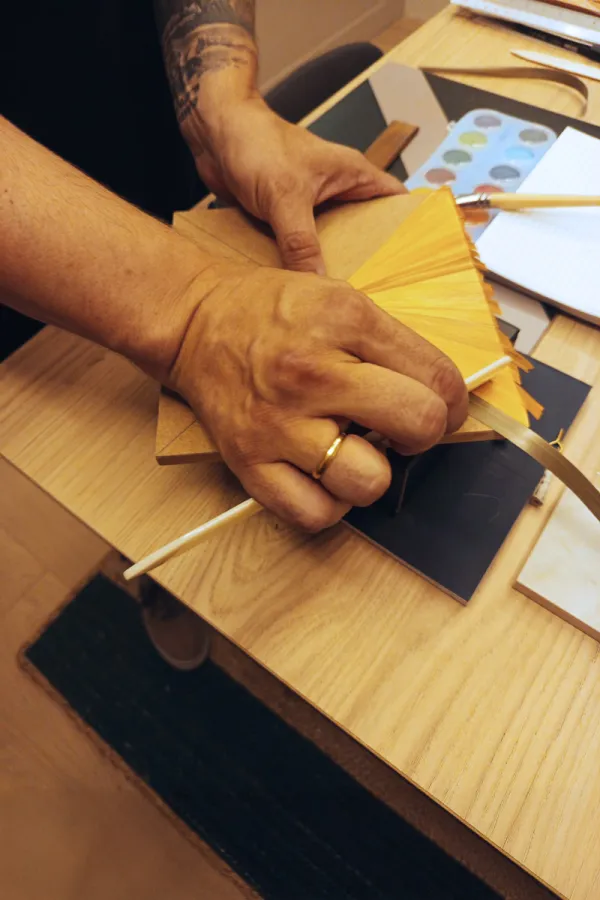
Rye straw is a material that appears humble, but with an unsuspected richness. What distinguishes it is its natural shine, a glow that comes from the silicon that coats the stem and acts as a protection against fungi and pests. This shine is what makes each piece unique: light reflects differently depending on the angle from which it is viewed, creating changing and almost hypnotic effects.
I sometimes also use oat straw, which offers a more pearly and delicate finish, ideal for very subtle designs. Wheat, on the other hand, is too thick and stiff, which prevents the precision required for this technique. That's why rye remains irreplaceable: it has the perfect flexibility and luminosity.
Furthermore, to ensure the best quality, I grow my own rye. I select the seeds, monitor their growth, and carefully harvest each stalk. It's not just about obtaining the right material, but about experiencing it completely: from the earth to the finished work. This intimate connection with the natural cycle gives each creation added value. It's not just a decorative object; it's the story of a process that begins in the field and culminates in a piece that reflects light as if it were alive.
What did receiving a mention for Best Product Design at Casa Decor mean to you?
Receiving the second mention for Best Product Design at Casa Decor was much more than an award: it was a confirmation. Until then, my work had circulated in a very limited environment, appreciated by close friends or small circles of craft lovers, but with limited visibility. This recognition suddenly opened a huge window to the world of high decoration and contemporary design.
The most valuable thing wasn't so much the distinction itself, but the intimate certainty that the effort, dedication, and hours of solitude in the studio had meaning. For an artist who works with such an unusual, sometimes misunderstood material, this type of recognition is a reminder that passion finds echo in others.
That mention opened doors to collaborations with interior designers and shared projects with other creators. But above all, it allowed me to show that rye straw marquetry is not just an ancient technique, but an art capable of dialoguing with contemporary design and moving today's audiences. It was, without a doubt, a turning point that marked a before and after in my career.
You come from a family of carpenters. Has that influenced your understanding of this craft?
Without a doubt, my family heritage has profoundly influenced the way I approach this craft. I'm a fourth-generation cabinetmaker and carpenter, and although my family doesn't always fully understand my fascination with straw marquetry, they've respected my choice from the beginning. Growing up surrounded by workshops, tools, and the smell of wood gave me a special sensitivity toward natural materials.
Working with rye straw isn't the same as working with wood, but there's an invisible link between the two materials: the patience they require, the need to listen to their needs, and to respect their timing and limitations. Growing up in that environment allows me to integrate marquetry with furniture in an organic way, creating pieces that not only serve an aesthetic purpose but are also coherent and functional.
Although being a carpenter isn't essential to pursue this art, I believe my roots give me an advantage. They allow me to unite tradition and modernity, understand the crafts from within, and give each creation a unique identity. In a way, I feel like I'm continuing my family's history, but with my own distinct language, which brings a new voice to that artisanal heritage.
How do you envision your future as an artist, and what challenges do you face today?
My greatest dream is to be able to dedicate myself fully to this art, to live it without distractions and with the serenity it requires. I imagine myself in my country house, surrounded by nature, growing my own rye, experimenting with natural dyes, and letting each piece emerge unhurriedly, at the leisurely pace this craft demands.
However, the path is not without its challenges. One of the biggest challenges I face today is the lack of institutional support. In Castilla-La Mancha, I have received some support, but in general, it is a little-known technique and, therefore, little promoted. Sometimes I feel like I'm fighting against invisibility, because this work doesn't fit the most common molds of what is understood as craftsmanship or design.
Even so, enthusiasm sustains me. In recent years, I've begun teaching courses, and that experience has been very enriching: sharing my knowledge forces me to organize and delve deeper into my own process, while at the same time I learn a lot from my students. I'm also exploring collaborations with jewelry and fashion designers, a new and exciting field where straw can unfold unexpected possibilities. More than a challenge, I see it as an opportunity: to continue demonstrating that this ancient technique still has a great future ahead.
Seeing Rubén Fabuel's work in person is a transformative experience. Before this interview, I had seen photographs of his pieces and knew the charm of rye straw marquetry, but seeing it in person surpasses all expectations. There is something almost magical about the way the light reflects on each fragment, creating sparkles that change with every movement, as if the pieces were breathing.
It's easy to understand why the most prestigious interior designers are increasingly incorporating this technique into their projects. It's not just about decoration: it's art in its purest form, capable of transforming a space and imbuing it with a unique personality without losing the artisanal essence that makes it so human.
Rubén has managed to rescue and renew a centuries-old technique, giving it its own place in contemporary design. His passion, his dedication to the entire process—from the cultivation of the rye to the final piece—and his constant pursuit of beauty make him an exceptional artist. Admiring his works is, without a doubt, a privilege that leaves a lasting impression.