
Marco Moncloa: a voice, a career and a passion for zarzuela
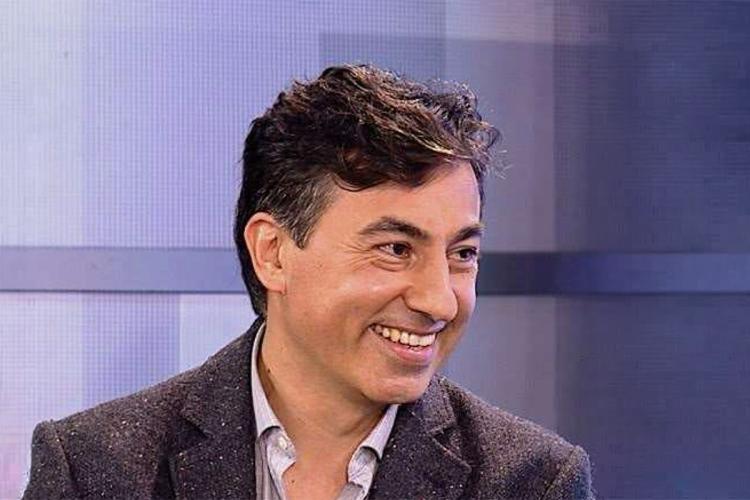
Ana Zuazo interviews baritone Marco Moncloa on zarzuela — its history and future, a vocation inherited from his orchestra-conductor mother, and L’Operamore’s tour of Latin America.
There are musical genres that are not only heard but felt and lived, and that end up becoming part of our history. For me, zarzuela is one of them. It has the wonderful ability to move me with a romanza, to draw a smile with a witty line of dialogue and to carry me to another era with the first bars of a score. It is tradition, feeling, humour and culture; a genuine treasure of our musical heritage that deserves to be known, enjoyed and passed down from generation to generation.
And yet, as a devotee, there is something that worries me: zarzuela does not always receive the support, promotion and visibility it deserves from our cultural institutions. Many young people barely know it and have not had the chance to discover everything it can offer them. And, without realising it, they are missing out on an extraordinary theatrical and musical experience.
Because zarzuela is neither old-fashioned nor dull. Quite the opposite! It is a spectacle full of life, with wonderful melodies, endearing characters, intrigue, irony and dialogue that still make us laugh. It is emotion, music, theatre and humour. Anyone who settles into their seat ready to be swept along can leave the theatre grinning from ear to ear. And that, in times like these, is no small thing.
To understand its origins we have to travel back to the 17th century, during the reign of Philip IV. The Palacio de la Zarzuela, on the outskirts of Madrid and surrounded by brambles —zarzas— gave its name to the theatrical performances with music that entertained the court. Over the centuries, that courtly entertainment became one of the great hallmarks of our musical culture.
Among its earliest landmarks we find Lope de Vega, author of La selva sin amor (1629), and Pedro Calderón de la Barca, whose El golfo de las sirenas (1657), with music by Juan Hidalgo, stands as a milestone of those first productions. Later would come unforgettable works such as La verbena de la Paloma, La revoltosa, La del manojo de rosas and Agua, azucarillos y aguardiente, titles that are part of our collective memory.
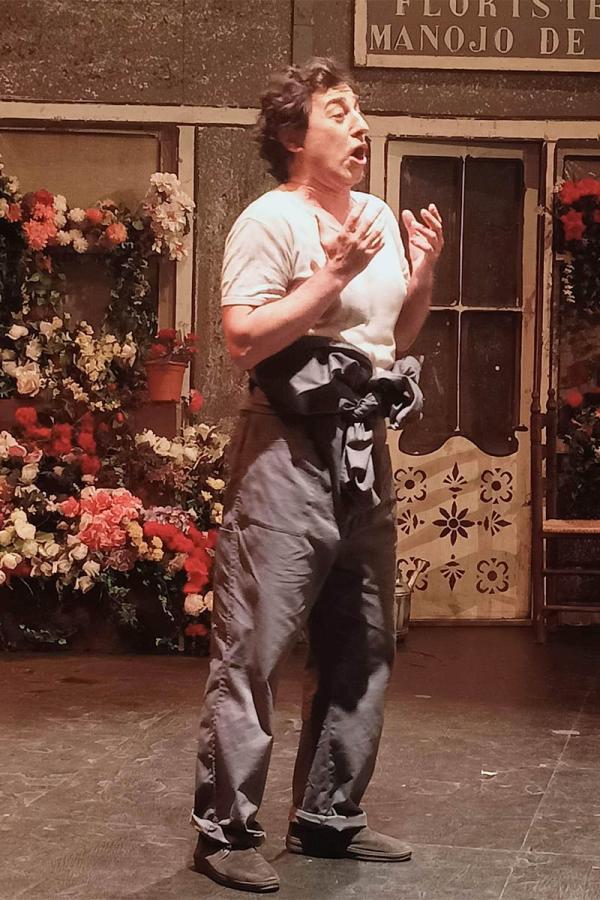
Today I have the pleasure of talking with Marco Moncloa, a baritone with a long career, linked from a very young age to the world of lyric music and committed to zarzuela.
Born in Barcelona in 1972, he began his musical training alongside his mother, the maestra Dolores Marco. In 1989 he was engaged by José Tamayo to take part in the Antología de la Zarzuela, a show with which he toured international stages. Since then, his career has spanned zarzuela, opera and musical theatre, with performances at major theatres and festivals.
The baritone is to zarzuela what the tenor is to opera: a voice that, with its personality and its nuances, can bring unforgettable characters to life and contribute decisively to the emotion of a work. And it is precisely about voices, stages, vocation and the future of our lyric genre that we talk in this interview.
What is zarzuela missing?
Marco, from your experience, what do you think zarzuela is missing nowadays in order to regain prominence and reach new generations?
I think one of the great problems is the lack of support and promotion from cultural institutions. Sometimes it seems to be regarded as a “fusty” genre, something old that doesn’t fit today’s tastes. And that’s a shame, because we’re talking about an extraordinary musical and theatrical heritage, one that is part of our identity and has nothing to envy in other great lyric traditions.
Education is essential to change this perception. From school onwards, children should be introduced to different art forms —organising, for example, an outing each term to enjoy a dance performance, a play and, of course, a zarzuela. We can’t expect young people to love a genre they barely know.
Besides, one thing doesn’t rule out the other. My son, for instance, has been to see Shakira and enjoys today’s music, but he’s also passionate about zarzuela because he has grown up knowing it. He has even taken part in some of our shows. Young people can enjoy very different styles when they are given the chance to get to know them.
I remember a zarzuela production at the Rome Opera, with a magnificent cast, a great orchestra, a carefully crafted staging and spectacular costumes. The audience came away impressed. Many spectators couldn’t understand how a genre with such musical and theatrical richness didn’t have a wider reach. Experiences like that show that zarzuela can move audiences beyond our borders too.
A vocation born at home
Marco, you grew up in a family closely connected to music. How did that environment influence your vocation and your decision to become a baritone?
There are thirteen of us siblings, from two different fathers, and seven of us are closely tied to this world: there are producers, singers, even an orchestra conductor. My mother, I’d say, gave me an almost Spartan upbringing when it came to my musical training. By the age of fifteen I was already clear that I wanted to belong to this world and that I wanted to be a baritone.
His mother, María Dolores Marco Seseras, was a pioneering figure in orchestral conducting in Spain, especially associated with zarzuela. Growing up with a mother devoted to music must have deeply shaped your artistic path.
In my case, I also try to pass that passion on to my children. My daughter, who is eight, studies the viola and ballet, and my son, who is ten, piano and ballet; they are growing up surrounded by music and art. It gives me particular joy to see that my son seems increasingly certain that he wants to follow in our footsteps. I don’t know where that path will take him, but I believe a vocation can’t be imposed: it can be sown in childhood, by sharing what moves us and letting children find their own way.
The stage, the best school
What advice would you give to young people who are starting out in their artistic careers and dream of making their way in the world of lyric music?
Above all, that they focus on gaining experience and seize any chance to get on a stage, even if at first it is on a collaborative or charitable basis. It is essential to learn to connect with the audience, to feel them and to know how to convey what you carry inside.
You have to start from the bottom. However much you may have studied at a school or a conservatoire and been told you are ready, the reality of the stage is another matter. You can’t expect to land a leading role straight away without having walked that path first.
The stage is the best master’s degree there is: that is where you really learn, mature and discover how to carry yourself as an artist. Before demanding a lead role or a good salary, you have to prove your worth. The only way to gain confidence and grow professionally is to work, to perform and to accumulate experience. In this profession, the learning never ends.
Zarzuela on the other side of the Atlantic
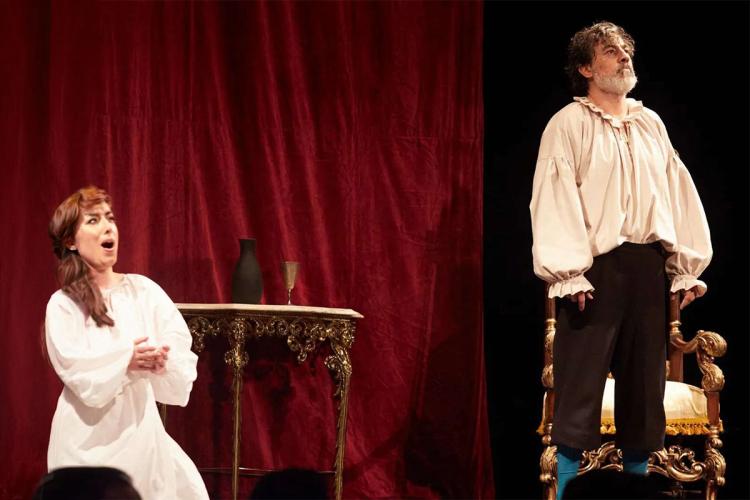
L’Operamore has a tour of Chile and Argentina planned for July next year. What do you hope for from this experience? Is the passion for zarzuela still alive in Latin America?
Of course it is! At first, for scheduling reasons, we’ll go for just two weeks, but we hope to be well received so that we can return next year and extend our opera and zarzuela season in Latin America.
There is an important zarzuela tradition in many Latin American countries. Spanish zarzuela reached the Americas and took root there, evolving into forms of its own as well. Cuba is an extraordinary example: it boasts great composers such as Ernesto Lecuona and Gonzalo Roig, and works as emblematic as María la O, by Lecuona, with a libretto by Gustavo Sánchez Galarraga, which remains a benchmark of Cuban zarzuela.
It is essential to keep that cultural link alive and to go on bringing our shows to Latin American audiences. It thrills us to share our passion for lyric music with new audiences and to help keep zarzuela alive on both sides of the Atlantic.
From palace to palace
To finish, let’s return to palaces. Zarzuela owes its name to the Palacio de la Zarzuela, and your surname leads us straight to the Palacio de la Moncloa. It seems it was written in the stars! Is it a surname that weighs on you?
(He laughs.)
My surname is of Spanish origin, although my father was Peruvian. The curious thing is that I think there are more Moncloas in Peru than in Spain. In fact, right now I think we are the only ones who carry this surname here.
And so, between palaces and surnames, we bring this conversation to a close. Zarzuela was born in the time of Philip IV and today we have Philip VI. Only one little stroke of a king’s number changes — but if only so little were enough for our lyric art to receive the boost it deserves!
Joking aside, Marco has shown that passion, talent and hard work can keep an artistic project alive even when the road is not easy. But the whole weight should not fall on those who, like him, devote their lives to keeping a company going. Zarzuela needs institutional backing, resources and continuity so that its productions can reach more stages and new generations can discover it.
Let’s hope the day comes when defending zarzuela is no longer a cause to fight for but something natural. And then, who knows, perhaps we’ll be able to say that we have finally moved from austerity to prosperity. Let’s see if the palaces take note: this time we are not asking for an audience, but for a good future for zarzuela!
My most heartfelt thanks to Marco Moncloa for this interview, for his warmth and for the wonderful time we shared; what is beyond doubt is that I will go on enjoying and supporting this genre as the devoted lover of zarzuela that I am. Hoping you won’t retire for very many years yet — see you soon!