
“They are aware of more options, this is no longer their first cruise, and they compare alternatives more thoroughly before booking.” In addition, “they are more digitally savvy: they research online, read reviews and make a decision once they are well informed”. They are also “less concerned about language barriers, so they are willing to try cruise lines they would previously have ruled out”. Furthermore, “they pay closer attention to the real price — not just the base fare, but the final cost including extras — and book further in advance”.
What cruise passengers look for
The five main factors influencing passengers when choosing a ship are “the itinerary and destinations (the destination matters more than the brand); value for money (the final cost including all extras); service on board (attention, cleanliness and sufficient staff); the size of the ship; and genuine all-inclusive packages with no hidden costs (drinks, gratuities, Wi-Fi with no surprises…)”, said Jesús García.
He went on to explain that passenger loyalty is stronger towards cruising itself than towards individual cruise lines. “In the first case, 82% plan to take another cruise and fall in love with this type of holiday. The percentage of travellers loyal to a particular cruise line, however, is lower. In fact, 72% say they are loyal to cruising, but add that they are willing to change cruise lines. For every passenger loyal to one brand, there are three who will switch without hesitation.” In this respect, “loyalty is to the destination and the experience, not the brand. If another cruise line offers a better itinerary or price, the customer will switch”. Likewise, “loyalty programmes help retain customers, but they are not decisive”; and García warned that there are early signs of “an increase in the percentage of passengers who do not return after their first or second cruise experience”.
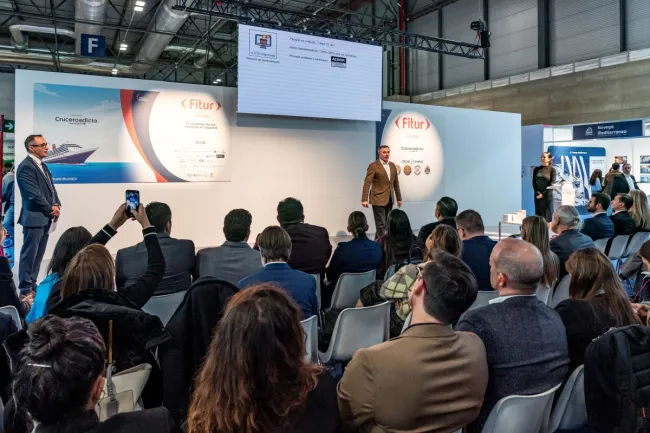
The largest international Spanish-language cruise event
FITUR Cruises is the section specialising in cruise tourism at the International Tourism Trade Fair, organised by IFEMA MADRID in collaboration with Cruceroadicto. It will hold its sixth edition from 20 to 24 January 2027, with Puerto Rico as its global sponsor.
Following the growth recorded in previous editions, FITUR Cruises will move to a new location in Hall 4, with the largest exhibition space in its history. This expansion responds to the continuing increase in the number of participating companies and organisations linked to the cruise ecosystem and will allow the different areas of activity to be better integrated, facilitating interaction between exhibitors, industry professionals and the public.
The event will bring cruise lines, ports, destinations, travel agencies and travellers together in one place, with the aim of strengthening a unique model that encourages professional networking, business opportunities and direct engagement with the end customer.
Among the key topics will be the debate surrounding the evolution of the cruise experience and the growing polarisation of travel motivations: whether cruising remains primarily a way of discovering destinations ashore or whether, by contrast, the ship itself has become the central focus of the holiday experience for an increasing number of travellers.
Figures
According to the State of the Cruise Industry Report 2026, produced by the Cruise Lines International Association (CLIA), the sector reached an all-time high of 37.2 million passengers worldwide in 2025. The report also showed high levels of satisfaction and loyalty, with almost 90% of travellers saying they intend to take another cruise in the future. These figures confirm the strength of a tourism segment that continues to expand its customer base and diversify its offering internationally.