
John Banville relaunches The Infinities
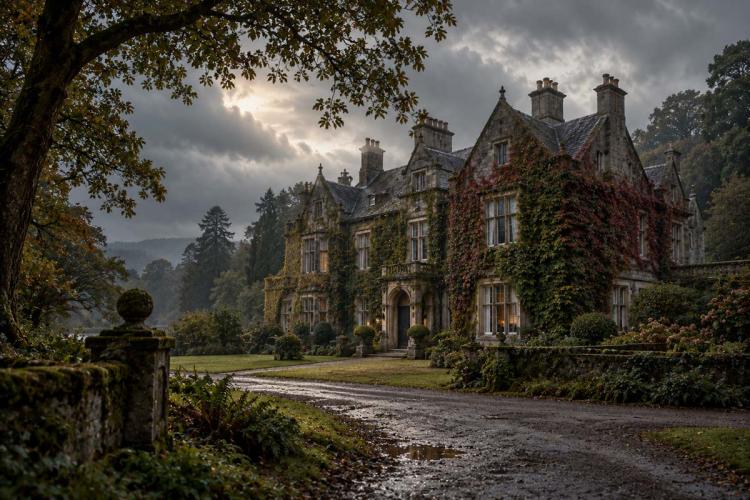
John Banville relaunches The Infinities (2009), his first novel after the Booker Prize: a playful, melancholy exploration of mortality, narrated by the god Hermes in a decaying manor house in the Irish countryside.
LinkMyriam BO
John Banville, winner of the Prince of Asturias Award for Letters, is relaunching The Infinities, his novel first published in 2009. It is a singular exploration of our mortality and our place in the cosmos, blending sensuality and a playful spirit, and echoing everything from Greek tragedy to Shakespeare's comedies by way of Chekhov's dramas, all delivered in the author's sumptuous prose and unique wit.
This was his first novel after winning the Booker Prize, and one of the most original in Banville's body of work.
The Infinities
With a theatrically inspired premise —the action unfolds over a single day in a single setting— Banville sets to work the themes that have characterised his output —the search for existential meaning, melancholy reflection on the passing of time, a fascination with beauty, creativity and desire as the prime movers of human life, tensions within couples, the challenges of relationships between parents and children, professional rivalries...— though from an unprecedented angle: the influence (or the meddling) of the gods in human affairs.
The writer takes us to a somewhat decaying, gloomy country house in the middle of the Irish countryside, Arden, where several members of the family that owns it, the Godleys, have gathered to bid farewell to the patriarch, Adam, who lies in a coma, awaiting —according to his personal physician— certain death.
The patriarch of the Godley family, an admired mathematician, lies in bed in a deep coma from which his doctor insists he will not wake. His inner circle has gathered at the family estate, led by his second wife, Úrsula, and his two children, pitted against each other since childhood for their father's favour and mired in their own romantic turmoil. As they all mentally go over the tensions and grievances that divide them, no one suspects that the patriarch, far from being a vegetable, retains a very lucid consciousness. The unexpected arrival of several visitors with unclear intentions will further unsettle the atmosphere; perhaps those newcomers are the gods themselves who, mischievous and playful, watch every act of this family and even step in to steer its course.
Such a delicate occasion invites each of them to review their personal history and their relationship with the dying man, as well as their own stage in life, marked by romantic unease, grievances and doubts. The intrusion of a series of secondary characters —some expected, some not— with unclear intentions will help to tangle and sour an atmosphere that is already disconcerting and hard to manage. What none of them realise is that certain gods, in particular Hermes, who narrates the story, follow every one of their steps and musings with a cheerful, mischievous mood, and do not hesitate to resort to the most varied subterfuges to take advantage of them or influence their decisions. Nor can they know that the patriarch, beneath the vegetative state he is assumed to be in, not only perceives the movements around him but is plunged into a very deep, reflective lucidity, obsessed to the end with the great questions about the universe that his mathematical formulas revolutionised, and with taking stock of a life heavily marked by the guilt of having neglected his loved ones.
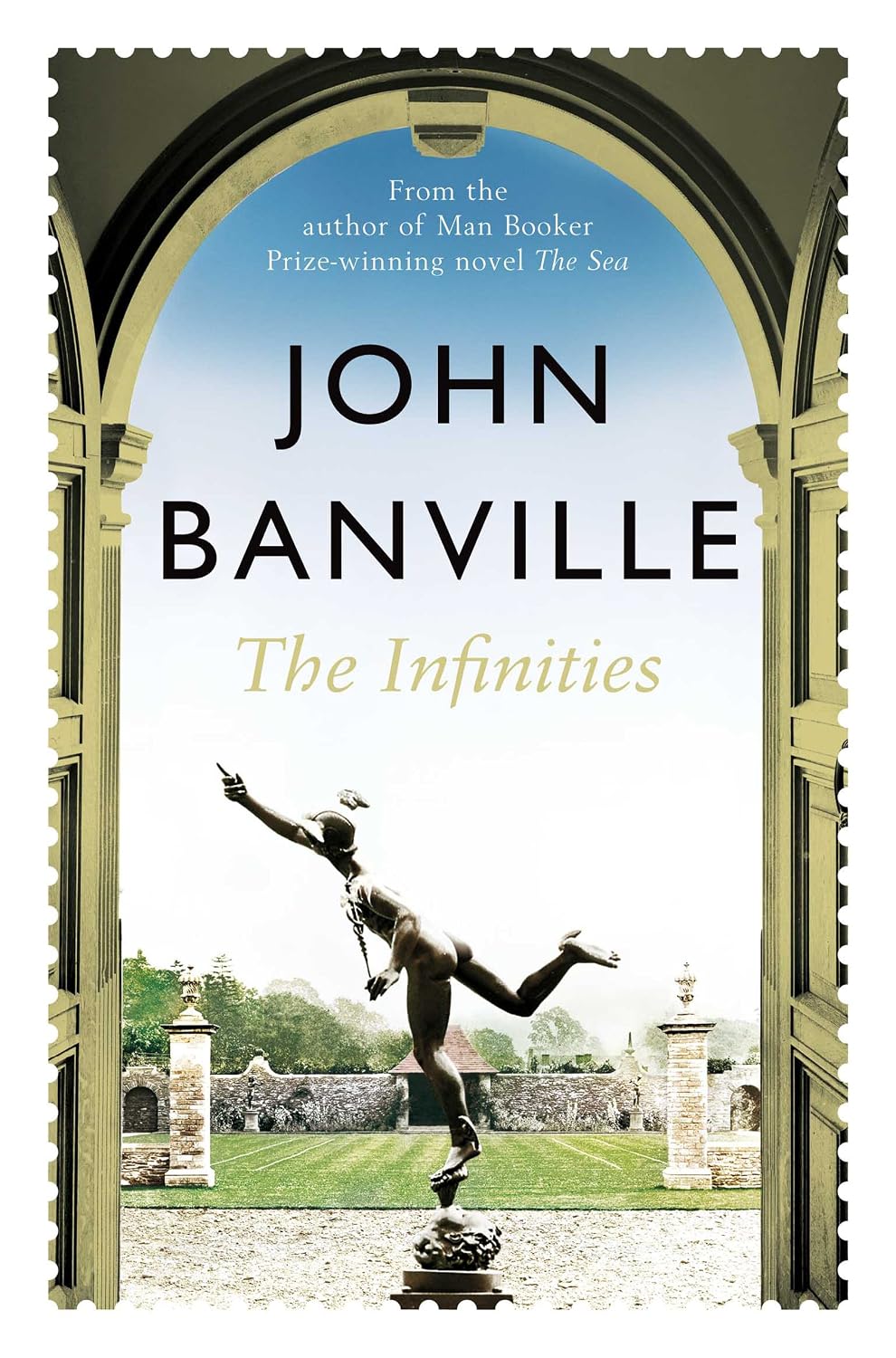
Even the gods meddle in family affairs
In The Infinities, John Banville brings a family together in a fading Irish country house to say goodbye to its dying patriarch.
There are old grievances, difficult relationships, secrets and scores still to be settled. And, as if that weren't enough, the gods are watching from very close by — and they don't always content themselves with simply watching.
A novel about mortality, desire, family and our place in the universe, told with Banville's characteristic wit and sumptuous prose.
The author
John Banville has worked as an editor at The Irish Times and is a regular contributor to The New York Review of Books. With The Book of Evidence (Alfaguara, 2014) —later collected in The Freddie Montgomery Trilogy (Alfaguara, 2020), together with Ghosts and Athena— he was a finalist for the Booker Prize, which he won in 2005 with The Sea (Alfaguara, 2019), also named novel of the year by the Irish Book Award. The writer went on to write his cycle of crime novels, centred on the forensic pathologist Quirke and set in the Dublin of the 1950s and 1960s, under the pseudonym Benjamin Black.