
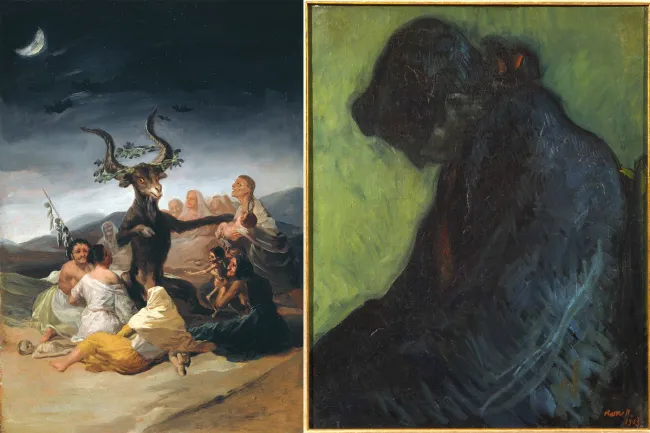
Two artists separated by more than a century, Francisco Goya and Isidre Nonell, meet and engage in dialogue, sharing a remarkably similar understanding of painting and a common sensitivity to the marginal and the tragic in the face of the aesthetic and moral conventions of their time.
The exhibition brings together the most significant pieces from Nonell's more intimate period: five drawings with his distinctive, aged finish and color, known as "fritos," and seven oil paintings, including his earliest portraits of Roma women.
These works are displayed alongside Goya's pieces from the Museum's collection, such as The Witches' Sabbath and The Witches.
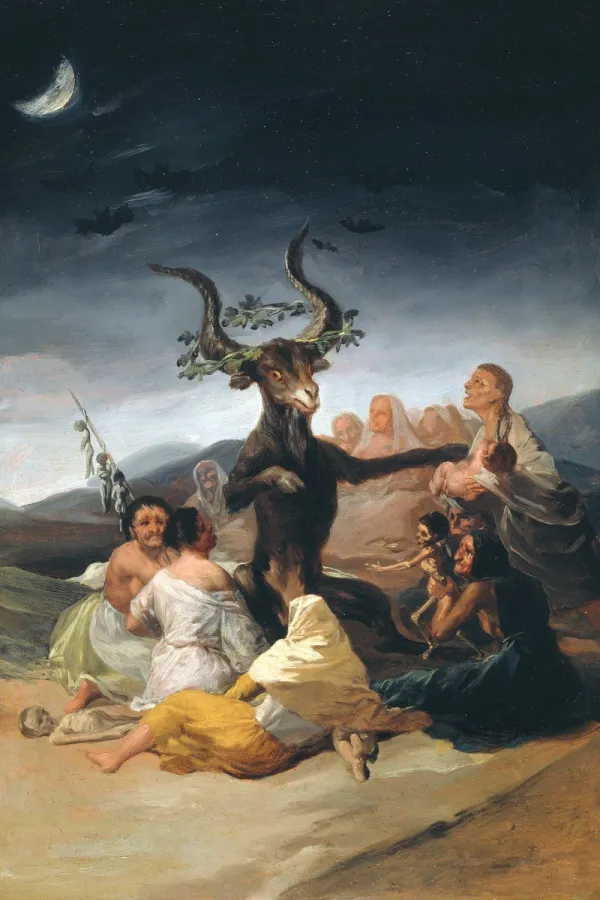
Isidre had not exhibited in the capital for over 20 years, and never before “looking at Goya,” with these significant pieces that can be seen together in Madrid for the first time.
The exhibition can be enjoyed until January 18th in the Goya and Guest Art galleries of the Lázaro Galdiano Museum.
An invitation to the viewer to “discover how the echo of the Aragonese artist resonates in the modernity of the Catalan,” notes the Museum's director, Begoña Torres, one of the exhibition's curators. Therefore, placing Nonell physically and timelessly alongside Goya is not a casual gesture, but rather “the revelation of a profound connection that, like a silent current, transmits to us a way of understanding painting as a mirror of the soul, a way of looking at humankind from its own solitude. But also from compassion, truth, and rebellion, a testament to a critical conscience in the face of social hypocrisy,” she stated.
“Isidre Nonell created a pictorial universe starring uprooted and marginalized characters whom he endowed with great dignity and beauty, offering their representation to the same society that rejected them,” commented Nadia Hernández Henche, curator of collections and also curator of this unique selection.
Nonell's works
The exhibition at the Museum thus proposes an intertextual dialogue, "a phenomenon of cultural, stylistic, and intellectual transfer that did not go unnoticed by critics of his time, especially when the striking drawings from the 'Cretins de Boí' series, which he created in 1896, were exhibited," Torres stated. In the summer of 1896, the artist—who had studied at the Barcelona School of Fine Arts until 1895, and later in the studio of the painter Lluís Graner—drew the inhabitants of the Boí Valley afflicted with cretinism, abandoning the landscapes he had initially cultivated with La Colla del Safrà (The Saffron Gang)—a group of artists who painted the area around Sant Martí, capturing a realistic and suburban vision that contrasted with the tradition of Romantic landscape painting—and focusing from then on on the human figure, especially that of the most disadvantaged. “This event was pivotal in the painter’s career, sparking his interest in the underworld of marginality. This interest would permeate his entire body of work and define an innovative, unique, original, and modern style,” Hernández noted. And beyond that, it represented a transformative vision that proposed a model of artistic beauty based on ugliness and the grotesque, the same vision that inspired Goya’s witches and monsters, which will be displayed at the Lázaro Galdiano Museum alongside works such as The Witches’ Sabbath and The Conjuring.
The work "Beggar" (lithographic pencil and watercolor on paper), created using traditional techniques, is how Isidre Nonell—a member of the "Els Quatre Gats" group along with Pablo Picasso and Santiago Rusiñol, among others, and associated with the "Black Spain" aesthetic, which he shared with Darío de Regoyos, José Gutiérrez Solana, and others—conveys the expressiveness of the uprooted characters he portrayed until the end of his life.
This exhibition also includes Nonell's earliest oil portraits
of Roma people, those presented at the artist's first exhibition at the Sala Parés in Barcelona in 1902: Gypsy Woman and Bust of a Gypsy, which “offered a genuine and modern vision far removed from exoticism, recognized by a small segment of the critics, who stated that ‘if it weren't for its touches of Goya and brushstrokes reminiscent of Rubens, we would consider it the best of all,’” Hernández noted. Also on display are Gypsy Woman and Melancholy (1903), from his second exhibition in Barcelona, and Bust of a Gypsy Woman (1904), an oil on panel painted without traditional preparation “where the artist experimented with a stippling technique, creating original vertical impasto,” Hernández explained.
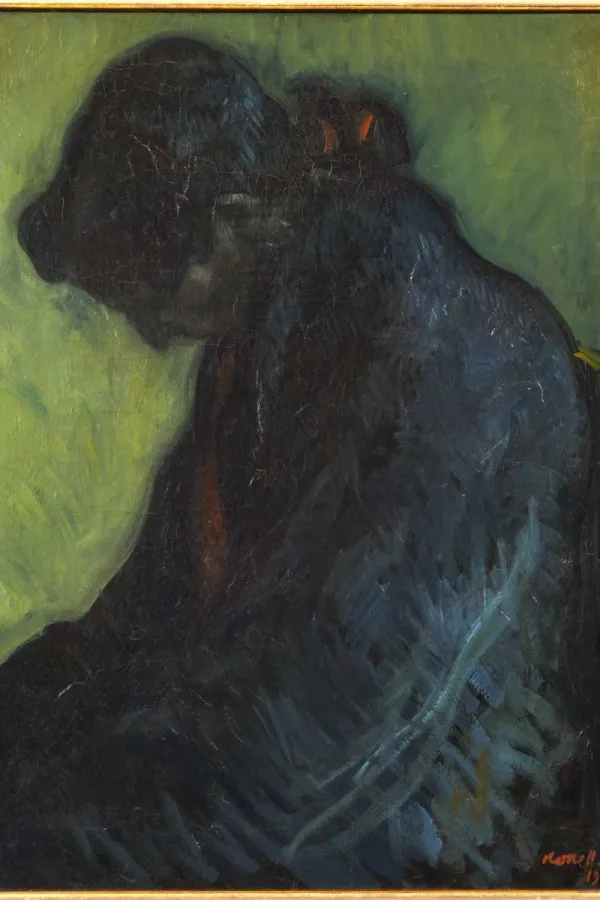
The exhibition is completed by Gitana and Angustias (1907), which correspond to a transitional period in which the painter began to also depict fair-skinned women in compositions awash in color and a luminosity that shapes the images.
Each of his portraits of Gypsy women demonstrates the respect Nonell held for his models, whose names often served as the titles of the canvases. In 1910, the Galeries Laietanes del Faianç Català held a retrospective exhibition of more than 130 oil paintings,
in addition to his drawings, whose resounding success was cut short a year later by the artist's premature death at the age of 38 from typhoid fever.
A bold observer of reality and an innovator, both in his choice of subjects and their execution, Nonell did so by transgressing conventions and, at times, paying a high emotional price: “I paint, and that's all,” he would say. That is why “Isidre Nonell looking at Goya” is a manifestation that “both artists possess a moral and ethical conception of art based on the idea that the mission of painting is not only to beautify reality, but to give visible form to human suffering,” Torres reflects.