
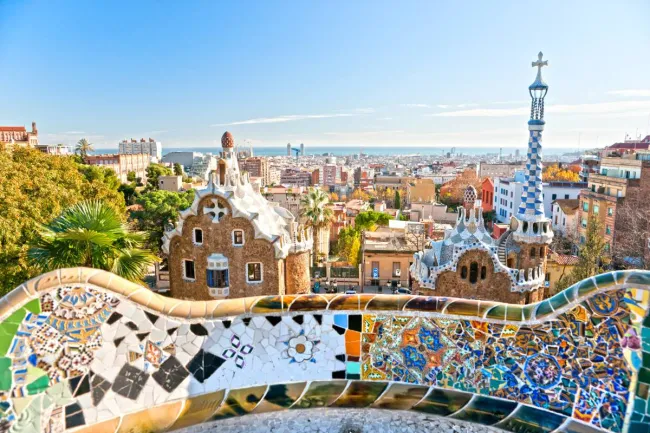
This year, 2026, marks the centenary of Antoni Gaudí's death, a date that the Generalitat of Catalonia has declared an Official Commemoration under the name Gaudí Year 2026, as well as an Event of Special Public Interest (EEIP) by the Spanish Ministry of Culture.
This commemoration, which will take place throughout 2026, aims to promote the figure and work of Antoni Gaudí i Cornet, one of the leading figures of Modernism and one of the most influential architects in the history of world architecture.
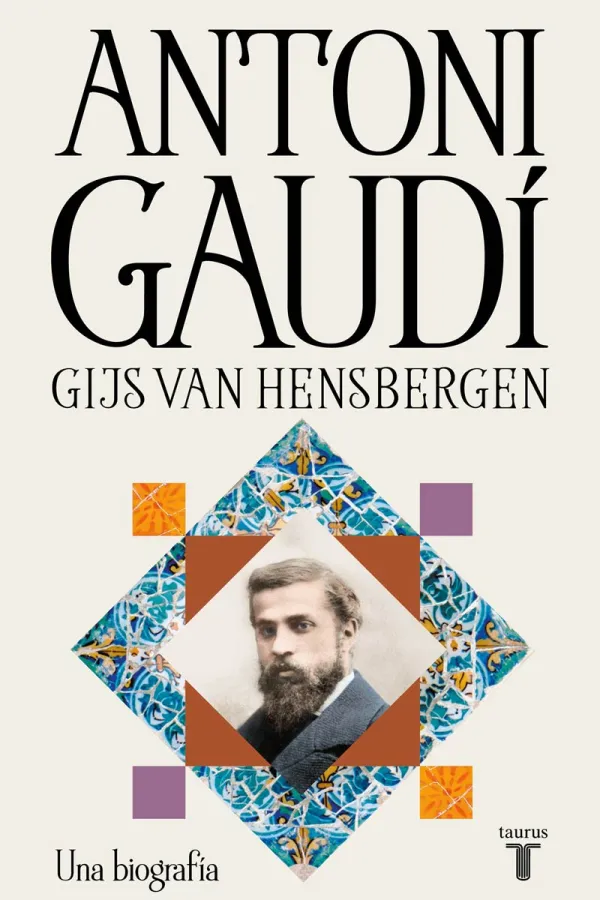
Meanwhile, the Taurus publishing house is reissuing Antoni Gaudí: A Biography, by Gijs van Hensbergen, one of the most comprehensive and narrative approaches to the life of the Spanish architect. In this new edition, which includes a new prologue by Gijs, the book reconstructs Gaudí's career without separating the work from its context and without turning his singularity into a caricature. More than a succession of buildings, it is the story of a vision and an era, the tale of how a creator forges himself, while a city reinvents itself through the ups and downs of modernity, inequality, fervor, and conflict.
Gijs van Hensbergen, historian and professor of Architecture and Art History, narrates Gaudí's life from his childhood in Reus to his creative maturity in Barcelona, paying attention to both the personal and professional relationships that sustained him and the cultural and political tensions that permeated the city.
Antoni Gaudí i Cornet was born in 1852 in Reus, hastily baptized after a difficult birth. His childhood is also recounted through the lens of physical fragility, which compels a different perspective. After a lung infection, Gaudí suffered from rheumatoid arthritis, and his recovery was lengthy. This weakness became a condition that drove him to observe and analyze the small and the seemingly banal.
Upon arriving in Barcelona, he initially settled in the Born district, in a working-class neighborhood. In 1879, he joined the Associació Catalanista d’Excursions Científiques (Catalan Association of Scientific Excursions), which placed him within a movement promoting mountaineering, drawing, surveying, natural sciences, and an interest in the Catalan countryside and its architectural heritage. His cultural life manifested itself in acts of work. Gaudí reviewed an exhibition linked to the Fomento del Trabajo Nacional (National Work Promotion). He designed the logo for the excursionist association and undertook organizational and decorative tasks, demonstrating his willingness to engage with the city not only as a student but also as an active participant. This period was pivotal for Antoni Gaudí, as it led to his decisive collaboration with Eusebi Güell.
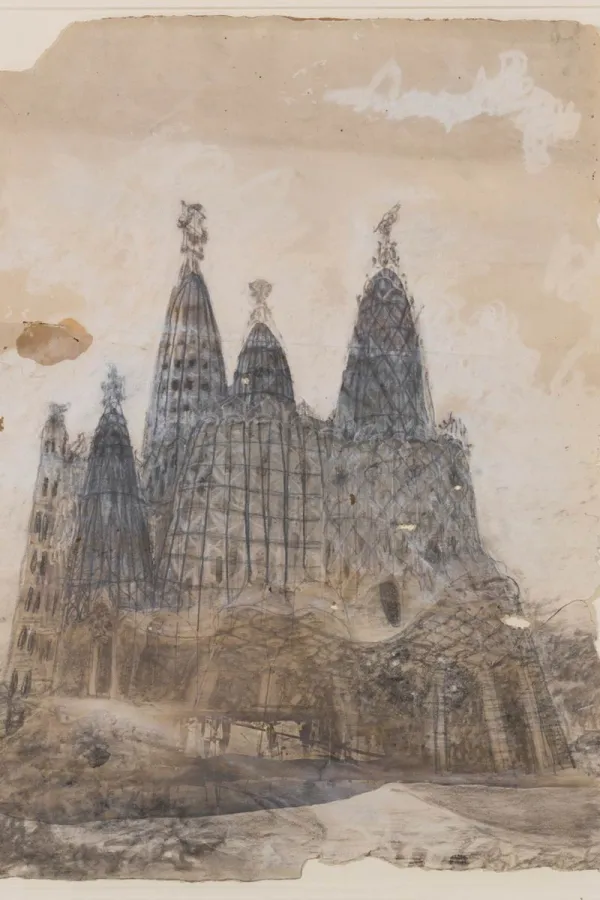
One of the most compelling threads in this biography is Gaudí's relationship with spirituality and symbolism, presented not as a marginal note, but as a central key to understanding his project. The Sagrada Familia emerges as a total horizon, a work that transcends the building itself to become a concept of the world, while other creations demonstrate how public space and imagination intertwine in the construction of the city.
In Antoni Gaudí: A Biography, the aim is to recover the man behind the myth and return him to his time, his decisions, and his influences, without diminishing his creative power.
The Barcelona that appears in these pages is not a backdrop, but a living organism. In this setting, architecture ceases to be mere form and becomes a public language, a way of intervening in the world.
The book also illuminates the complexity of Gaudí's reception in his own time, marked by enthusiasm and rejection, by fascination and bewilderment. The phrase attributed to a contemporary, "Gentlemen, are we today in the presence of a genius or a madman!", sums up the unease that something truly new provokes when it is still unnamed. And this unease, viewed from our present perspective, proves especially fruitful: it forces us to ask ourselves how cultural consensus is built and what we lose when we reduce a radical work to a comfortable brand, repeated ad nauseam.