
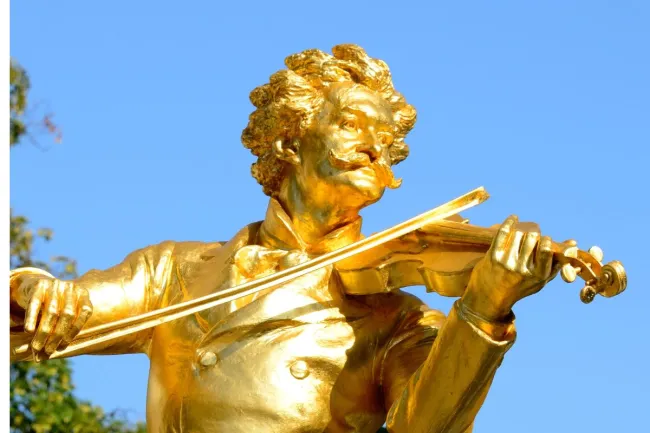
Johann Strauss, Jr. is the creator of the majestic work “The Blue Danube” and known as the “King of the Waltz.”
“Surely the brightest star of the Viennese Strauss dynasty, he is undoubtedly among the most fascinating personalities in music and its history,” said Alfred Uhl, a prominent Austrian composer, music teacher and conductor.
To commemorate, the city of Vienna has designed an extensive cultural program that includes more than 60 productions including concerts, operettas, theater, dance, film screenings and exhibitions.
Johann Strauss (son) was born in 1825. “He inherited from his famous father the musical talent of violinist and conductor and surpassed him in composition” wrote Kurt Pahlen, in his book Love Letters from Musicians.
Schani, as he was known in his family, grew up with an absent father, busy with constant performances, rehearsals and long tours. On the other hand, his mother, Marie Anne Streim, with whom he had a close relationship, encouraged him, as well as his brothers, in the musical field.
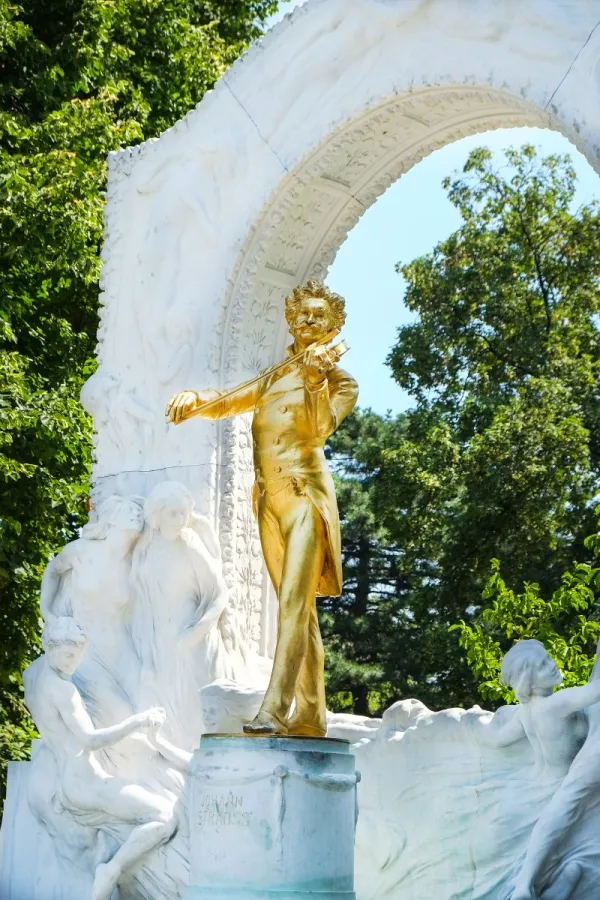
Among his studies were hours dedicated to the piano, violin, harmony, and counterpoint. A brilliant student, at the age of 16 he published his waltz Erster Gedanke and, three years later, he debuted conducting his own orchestra. Despite Schani's resounding success, the advertisements of that time highlighted who was the son and who was the father, since the newspapers continued to prefer the "only" Johann Strauss. Later, "the posters were equally displayed with their respective clarification, s. (sohn) or v. (Vater, father)", is mentioned in the book Johann Strauss and his dynasty by Eduardo Storni.
Internationally renowned for his "Blue Danube" (Austria's unofficial anthem), this waltz premiered on February 15, 1867 in Vienna. However, its author did not conduct it. According to the writer Storni, the event took place "in a stifling atmosphere, with too many people, and whether it was liked or not, the waltz that was to prevail throughout the world was not properly presented."
However, within the framework of the great Paris Exhibition and on the initiative of his wife, the singer, Jetty Treffz, they traveled to Paris and it was at a ball-concert at the Austrian Embassy, in front of European royalty and aristocracy, that Johann presented and conducted his work together with the Bilse Symphony Orchestra and its director, Benjamin Bilse. From this event, the Blue Danube captivated audiences of all nationalities.
With his melodies, Johann Strauss visited different countries. He enjoyed fame and prestige, just like his father. His legacy includes waltzes, operas, operettas (The Bat, the most famous in the world) and polkas, among other works.
One day, in the tranquility of his home with his “ardent beloved Adele”, as he used to write to his wife, the author Pahlen relates: “Adele is sitting on his bed. He kisses her hand, with that authentically Austrian gesture that at that moment contains deep gratitude for so much happiness. He feels that he has to die. It is said that Adele whispered to him sweetly: ‘Sleep, Schani‘ and he replied: ‘That is what I will do‘. He did not wake up again.”
Listen to a fragment of the Blue Danube with the Vienna Philharmonic Orchestra under the baton of Riccardo Muti, during the New Year's concert 2025.