
The nomination was submitted by the photographer Isabel Muñoz, the art historian Víctor Nieto and the film director Manuel Gutiérrez Aragón. The signatories reconfirmed their proposal, defending the "splendid work carried out by this institution for the benefit of Spanish audiovisual heritage, with the threefold aim of conserving, restoring and disseminating it. Through its sustained and decisive work, it has become an essential point of reference within our country's cultural landscape."
The Academy has been keen to underline the importance of publicly recognising work that is "not always sufficiently valued", yet essential to the protection of Spanish audiovisual heritage.
Established by the Academy in 1943, the Corporation's Medal of Honour is awarded annually to a Spanish or foreign individual or institution that has distinguished itself outstandingly in the study, promotion or dissemination of the arts, in artistic creation, or in the protection of historical, cultural and natural heritage.
Created by decree on 13 February 1953 under the name Filmoteca Nacional de España, the institution was founded with the mission of preserving the country's audiovisual memory. Since then, its work has established it as an indispensable reference point within the Spanish cultural landscape.
The Filmoteca Española currently holds close to 50,000 films, along with some 12,000 that are still only provisionally catalogued, amounting to more than 600,000 reels of celluloid, as well as the complete NO-DO archive, made up of 70,500 audiovisual documents that bear witness to several decades of Spanish film and social history. Added to this vast heritage are books, magazines, photographs and specialised collections acquired or donated over the years.
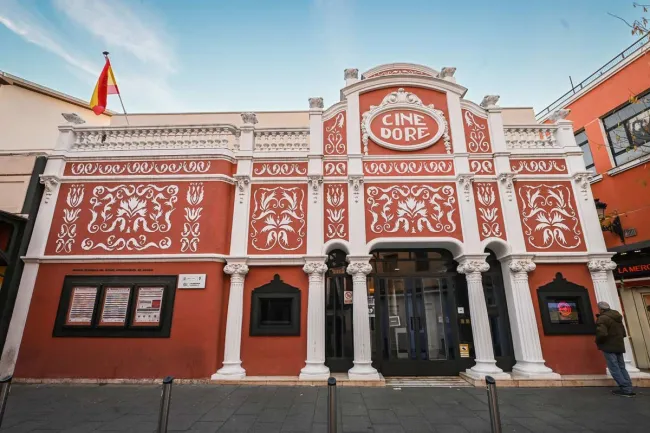
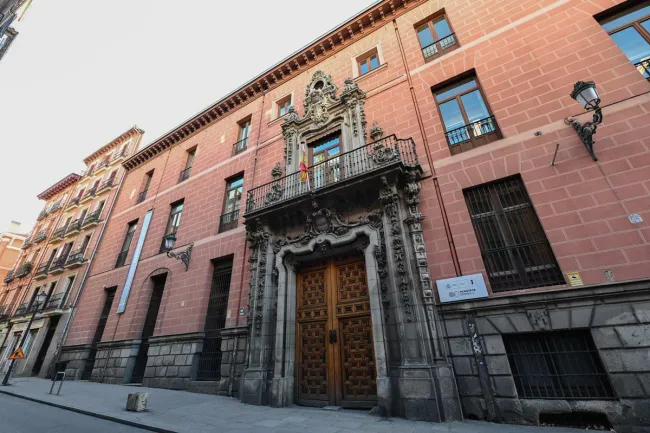
The institution carries out its work from three main sites: the Palacio del Marqués de Perales, its administrative headquarters; the historic Cine Doré, an emblematic film exhibition venue in Madrid; the "Carlos Saura" Centre for the Conservation and Restoration of Film Collections, in Pozuelo de Alarcón; and the so-called "Voltio", an underground space adjoining it, specially equipped to preserve materials made on cellulose nitrate, among them much of the little Spanish silent cinema that survives.
One of the essential pillars of the Filmoteca Española is its audiovisual restoration work, carried out by leading specialists. Thanks to this highly specialised work, numerous films have been recovered for present and future generations.
It was recently announced that the Spanish, French and Italian film archives, together with the Filmmuseum München, are driving the reconstruction of Don Quixote, the Cervantes adaptation that Orson Welles began in 1957 and left unfinished when he died in 1985.
Alongside this conservation work, the Filmoteca Española maintains an intense public and cultural programme at the Cine Doré, now a landmark venue for film lovers, with daily screenings devoted to cinema from different periods, directors and styles.
The Real Academia de Bellas Artes de San Fernando has worked closely with the institution on the biennial seasons "Las Bellas Artes en el Cine" (2022), "Compositores académicos del cine español" (2024) and "El Museo, protagonista", currently running. These initiatives have strengthened the ties between the two bodies and consolidated a collaboration intended to continue.
With this decision, the Real Academia de Bellas Artes de San Fernando reaffirms its historic commitment to defending and promoting the institutions and creators that contribute decisively to the cultural enrichment of Spanish society.