
The executioner's trilogy
Toni Hill immerses us in an intriguing thriller that combines the dark world of crime with the complex psychology of her characters. Through agile and captivating prose, she constructs a plot where the past and present intertwine, revealing secrets and hidden motivations that keep the reader on edge until the very last page.
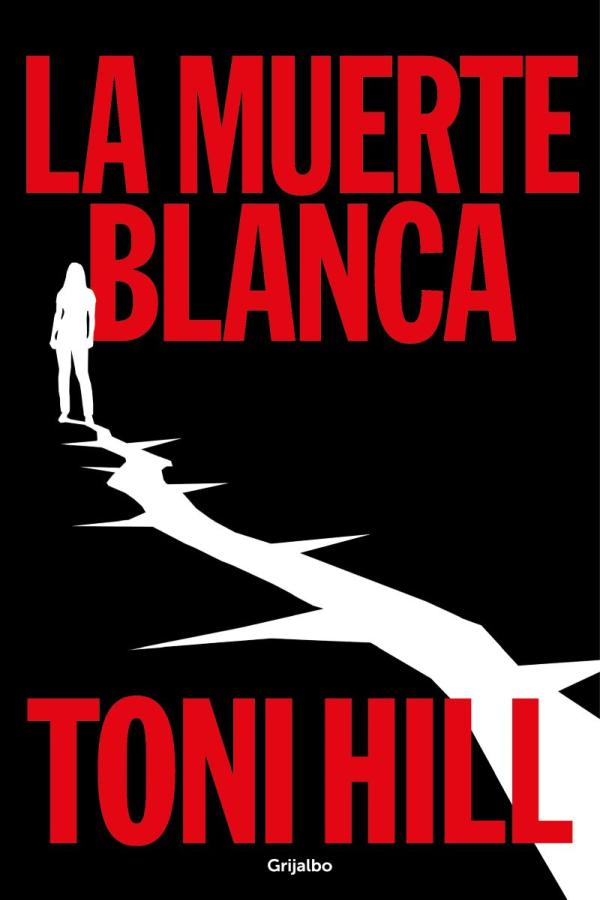
La muerte blanca (The white death) is the latest publication by writer Toni Hill. An addictive thriller that caps off the fascinating Executioner's Trilogy on a high note. A disturbing look at criminal instinct with which the Spanish author reaffirms himself, once again, as one of the great masters of the genre in Spain.
The trilogy
First was El último verdugo (the last execurioner), a fast-paced thriller set in present day Barcelona with a magnetic leading duo: the Executioner, a psychopath on par with Hannibal Lecter, Dexter Morgan, Anton Chigurh or Norman Bates who executes his victims with a vile garrote, and Lena Mayoral, a successful criminologist and writer, tasked with delving into the mind of the psychopath and responsible for his arrest and subsequent imprisonment.
Then came La hora del lobo (Hour of the wolf), the second part of the Executioner Trilogy. Set in the Pyrenean valley of Boí, a bucolic place where peace and quiet are shattered when the murder of a fifteen-year-old boy disrupts the lives of its inhabitants and once again puts criminologist Lena Mayoral in the media spotlight. Meanwhile, the Executioner, from prison, manages to sneak into the writer's life in a duel that grows in tension as the story progresses.
Now, with The White Death, the novel that concludes this ambitious trilogy, the disturbing disappearance of a girl in Barcelona once again forces the criminologist to confront evil in its purest form. That evil that also defines The Executioner, the psychopath who rose to fame for executing his victims under the slogan "someone has to do it." He is currently missing under another identity, although his shadow remains a latent threat in Lena's life. A threat that will not end, they both know, until the death of one of them.
Hill was presenting this novel at Semana Negra de Gijón, the literary festival of Asturias, and spoke of its central character, Charlie, thus: “For me, he's a fascinating character. My goal was to ensure he didn't generate rejection. No one can be a monster 24 hours a day. This man has a life in which, on top of that, he's a great seducer; he loves to lie, he lies outrageously well, and he allows himself to be surrounded by people who, moreover, are very good people and who accept him as such, because he constantly pretends to be a charming person. And to fake it, you have to be one for a while. His fantasies and the things he wants to do are other things. Then there's another side, which is what he doesn't show.”
Writer Carlos Zanón commented on this novel: “Very well-woven plots, a seemingly transparent style, but with great technical difficulty behind it. The Executioner is a very Patricia Highsmith, very Ripley-like character.”
The author
Toni Hill was born in Barcelona in 1966. He holds a degree in Psychology, although for years he has worked in literary translation and editorial collaboration in various fields.
In 2011, he launched his popular trilogy starring Inspector Héctor Salgado with The summer of dead toys (Debolsillo), an instant critical and commercial success published in some twenty countries. Ice angels (Grijalbo, 2016), Crystal tigers (Grijalbo, 2018), and The dark goodbye of Teresa Lanza (Grijalbo, 2021) established the author as one of the masters of the crime genre in Spain.
With The last executioner (Grijalbo, 2023), Toni Hill began her most addictive thriller trilogy, which earned her the 2024 Caja Negra Award. She continued it with Hour of the wolf (Grijalbo, 2024) and concluded it with The white death (Grijalbo, 2025).