
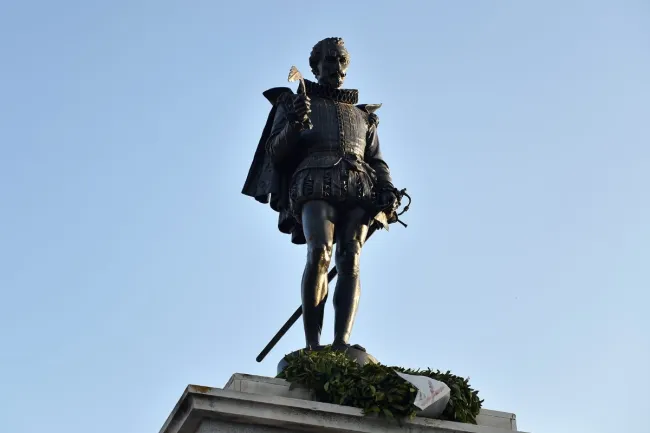
Who was Miguel de Cervantes, really? The exemplary and heroic hero of Lepanto? The eternal captive of Algiers? A writer reduced to being known for a single book? A man in love and free? Over the centuries, critics and historians have constructed an image of the author of Don Quixote. In this book, José Manuel Lucía Megías—professor at the Complutense University of Madrid and advisor to Alejandro Amenábar on his new film The Captive—sets out to dismantle the myths built up over the centuries.
Cervantes íntimo, amor y sexo en el Siglo de Oro (Cervantes Intimate: Love and Sex in the Golden Age) is an essay as provocative as it is rigorous. Through an intimate, well-documented, and unbiased perspective, the author invites us to rediscover Cervantes from new angles, moving away from the stereotypes and self-serving narratives that have shaped his image.
Lucía Megías explores everything from Cervantes' captivity in Algiers to his literary beginnings, encompassing his numerous works, his successes during his lifetime, the rediscovery of his lesser-known pieces, his historical context, and the women who shaped his life. She reveals how the myth was constructed, the myths that have ultimately obscured the man. The result is a book that challenges traditional narratives and reclaims the complexity and humanity of Miguel de Cervantes.
"But I fear Miguel would have stopped smiling if someone had predicted to him at that moment that he would indeed become famous, that he would enjoy the eternity of fame, but that it would be for having written Don Quixote. Don Quixote, of all things! What madness would Cervantes have thought if someone had been able to foresee that he, the author of an entirely original literary program, would end up becoming THE author of Don Quixote, only THE author of Don Quixote?" "Don Quixote was by no means the most successful work during his lifetime." It would be the centuries to come that would place him at the center of Western literature.” “And sitting at my computer, I can’t help but think: how many Miguel de Cervantes lived within this Miguel de Cervantes who, over time, has been reduced to ‘The author of Don Quixote’? An author who failed in his own time, misunderstood, reduced to four words in the definition given by his friend, the lawyer Francisco Márquez, at the end of his life: ‘Old, a soldier, a gentleman, and poor’? How many Cervantes-men will we encounter on our journey? Or are they not all, too, a story, a construction, just as we ourselves are, the memory we leave behind of ourselves with the passage of time?” Megías writes.
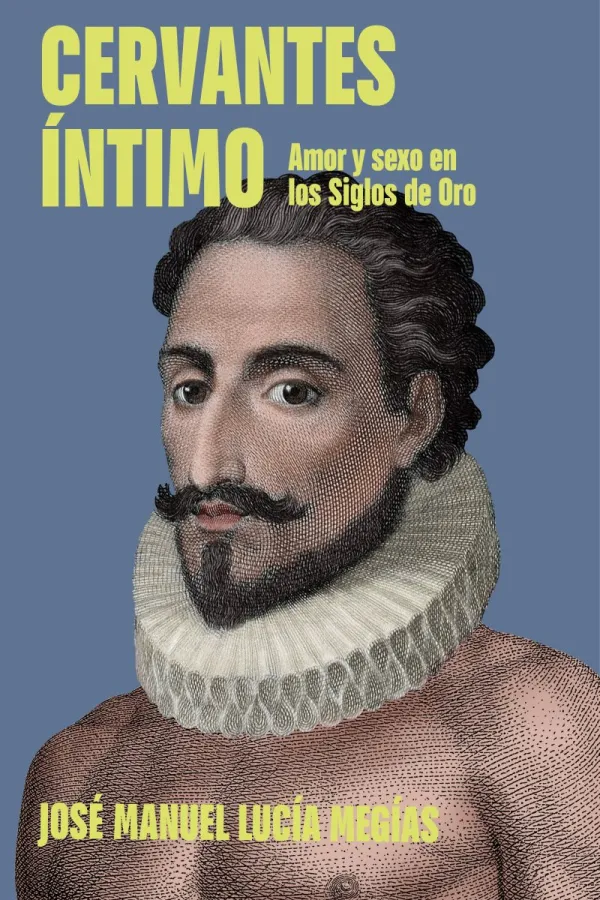
José Manuel Lucía Megías, professor at the Complutense University of Madrid and one of the most respected Cervantes scholars today, provokes the reader to discover the man that Cervantes was: from the temptation to read his works in a biographical key to the construction of heroic images based on his role in the Battle of Lepanto, passing through the multiple speculations about his sentimental and sexual life.
The author
Catedrático de la Universidad Complutense de Madrid y poeta. Su vida académica gira, desde hace décadas, en torno a los libros de caballerías, el Quijote, la iconografía quijotesca y, en los últimos años, la biografía de Cervantes, publicada entre 2016 y 2019, en tres volúmenes. Ha sido presidente de la Asociación de Cervantistas, así como responsable de la coordinación académica del Centro de Estudios Cervantinos y de diversas exposiciones de tema cervantino en la Biblioteca Nacional de España, el Instituto Cervantes, el Museo Casa Natal de Cervantes, el Museo del Quijote en Ciudad Real, la Universidad de Alcalá de Henares o en la Complutense de Madrid. Es padrino del Festival Cervantino de la Argentina, que tiene lugar en la ciudad de Azul desde 2008 y director de la Red de Ciudades Cervantinas, fundada en 2017. Además, ha sido galardonado con la encomienda de Alfonso X el Sabio por su labor de estudio y de difusión de la vida y de la obra de Cervantes.